
The Transformative Power of Software Programming in Education
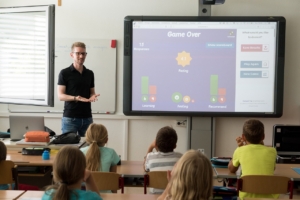 Software programming is the process of designing, writing, testing, and maintaining computer programs. While traditionally associated with computer science and engineering, software programming is becoming an essential skill for students across all disciplines. The potential of software programming to revolutionize the way we teach and learn is undeniable. By harnessing the power of technology, students are empowered to develop critical thinking and problem-solving will give them an edge in today’s competitive job market. With the help of software programming, students can also become more creative as they explore new ways to solve complex problems.
Benefits of Software Programming in Education
Software programming can revolutionize education by providing students with access to cutting-edge technology and tools that can enhance their learning experience. One of the primary benefits of software programming is that it allows students to create their own digital content, such as websites, apps, and games, which can then be shared with their peers and the wider community.
Software programming also provides students with the opportunity to learn computational thinking, a problem-solving method that uses a set of logical steps to solve complex problems. By learning computational thinking, students can develop skills that are essential for success in the 21st century, such as abstraction, decomposition, algorithmic design, and debugging.
Another significant benefit of software programming is that it promotes collaboration and teamwork. When students work together to develop a software project, they must communicate effectively, divide tasks, and solve problems collectively, skills that are crucial in today’s interconnected world.
Challenges and Solutions
While software programming offers many benefits to education, there are also some challenges that need to be addressed. One of the major issues that schools are facing is a lack of teachers with adequate programming skills. Due to their inexperience with software coding, teachers may struggle to effectively teach their students. This can make it challenging for the students to really comprehend the subject and make use of such knowledge in future applications.
To address this challenge, some schools are investing in professional development programs to train teachers in software programming. Additionally, there are numerous online resources and courses available that teachers can use to enhance their skills and knowledge.
Future of Software Programming in Education
The future of software programming in education is bright, with many schools and universities recognizing its potential to transform teaching and learning. One exciting development is the rise of educational robotics, which combines software programming with robotics to create interactive learning experiences. Educational robotics can help students develop problem-solving and critical thinking skills while also learning about science, technology, engineering, and math (STEM) concepts.
Conclusion Software programming has the potential to revolutionize education by providing students with access to cutting-edge technology and tools that can enhance their learning experience.
By promoting critical thinking, problem-solving, and collaboration, software programming can help prepare students for success in the 21st century. Despite there being certain difficulties such as the lack of coding abilities among educators, the potential for software programming within education is still strong. We anticipate to witness a lot of fascinating progress in this field over the coming years.
 Many young pupils have a knack for programming; they’re interested in computers and keen to understand how their systems operate. With proprietary software, this advice is a key so teachers don’t have any method of making it accessible to their pupils.